His Excellency,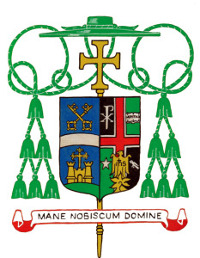
The Most Reverend Edward K. Braxton, Ph.D., S.T.D.
Diocese of Belleville
Sermon:
Easter Sunday,
April 4, 2021,
The 53rd Anniversary of the Brutal Murder of The Reverend Dr. Martin Luther King, Jr.
St. Luke Parish, Belleville
“What does “Happy Easter” Mean?”
(This is the text as originally written. During the actual delivery, some passages were omitted and other comments were added spontaneously. Nota bene: This text has not been thoroughly proofread. Therefore, there may be errors in spelling, grammar and punctuation.)
Dear Sisters and Brothers in Christ:
- The Requirements for a Happy Easter.
“Happy Easter!” To many people this traditional Easter Sunday greeting is a cheerful, upbeat message that usually means, “Enjoy your “holiday” with family and friends!” “Have a great Easter dinner and have fun with your children and grandchildren as they open their Easter baskets.” Or, “Winter is over, Covid-19 vaccines are available, so get out into the sunshine on this beautiful spring day!”
Strangely enough, for many Christians, the expression “Happy Easter!” ignores the fact that these “holidays” are actually Holy days. There is no way for a committed Christian to have a happy Easter if they ignore the meaning of this day. If you want your Easter celebration to be truly happy, this is what you must do: think and pray seriously about the words of the Creed which we proclaim most Sundays: “For our sake He was crucified, suffered, died, and was buried. He rose again on the third day in accordance with the scripture.” And a few lines later, “I look forward to the resurrection of the dead and the life of the world to come.”
We say “happy Easter” year after year, rarely thinking deeply about the resurrection. On Easter Sunday, do we ever ask ourselves, our wives, our husbands, our children, and our fellow parishioners: What do we think the resurrection really is? We seldom ask: What is the relationship between our hope for “the life of the world to come” for ourselves and for our loved ones and the resurrection of Christ?
Since we Christians tend to take our faith for granted, “Happy Easter” does not usually mean: “If you want your Easter to be happy, sit down with your New Testament and carefully and prayerfully study the Easter story. IF you did that, the first startling thing you would notice is that neither St. Paul’s letters, nor the four gospels, actually describe the resurrection. The only thing the scriptures say is: 1.) Jesus was crucified. 2.) He died and was buried. 3.) Holy women went to anoint Jesus’ body and found the empty tomb. Either a man or an angel tells the women: “Jesus has been raised.” 4.) The risen Lord appears to a small number of his followers. Listen again to what we heard from Mark, the oldest gospel narrative:
“When the sabbath was over, Mary Magdalene, Mary, the mother of James, and Salome bought spices so that they might go and anoint Jesus’ body. On entering the tomb, they saw a young man sitting on the right side, clothed in a white robe, and they were utterly amazed. The young man said, “Do not be amazed! You seek Jesus of Nazareth, the crucified. He is not here. He has been raised. (Mark 16,1-7)
According to the scriptures. only about five hundred disciples experience apparitions of the Risen Lord. The risen Christ is NOT seen by anyone who does not ALREADY believe Him to be the Messiah. Pontius Pilate, King Herod, the Roman Soldiers at the tomb, the leaders of the Jewish people who rejected Him, the crowds of Jewish people filling the street of Jerusalem for Passover. NONE of THEM see the Glorified Christ! Why not? Wouldn’t the testimony of unbelievers be more powerful than the testimony of believers? If the Risen Christ had appeared to emperor Tiberius Caesar in Rome, the emperor could have commanded the entire Roman empire to embrace the new faith. But, the Risen One did not appear to the emperor. He was only seen by those with eyes of faith. Let me remind you of what we heard Luke say in the Acts of the Apostles:
“God anointed Jesus of Nazareth with the Holy Spirit and power. He went about doing good for God was with Him. They put Jesus to death by hanging Him on a tree. This man God raised on the third day and granted that He be visible, NOT to all the people, but only to us, the witnesses chosen by God. He commissioned us to preach to the people and testify that He is the one appointed by God as judge of the living and the dead.” (Acts 34,37-43)
The Bible’s complete silence about the actual resurrection of Jesus makes it clear that we are dealing with something completely different from the resuscitation of a dead body, as with the raising of Lazarus. We are dealing with the transformation, transfiguration and glorification of Christ that is utter mystery. The resurrection is the wondrous work wrought by the God who IS God, dwelling in unapproachable light. The resurrection is a wonder that can only be experienced in the community of faith. Without that faith, a truly “happy Easter” is not possible for a Christian. It cannot be proved, not even by The Shroud of Turin! Neither CNN’s Wolf Blitzer nor Fox News’ Chris Wallace could have covered the actual resurrection for a television audience. The resurrection of Christ was not a “news event” in the same sense that the election of the President was a “new event.”
Yet, faith in the resurrection was the source of the hope of the earliest Christians. The resurrection of Jesus Christ is the radical source of our own hope as Christians that we, too, are called to share in the Lord’s resurrection and thereby experience a happy, or better, a blessed Easter.
- Contemporary “Opinions” About the Resurrection and Eternal Life
About seven years ago, a national study was done asking American Christians of different denominations what they believed about the resurrection of Jesus of Nazareth and life after death.
The results of the study were informative and thought-provoking. It found that many Christians, especially evangelical fundamentalists, believe in the literal, physical resurrection of Christ and physical resurrection of all people who have ever lived, so they can be judged by God. A good number of Christians, including some Catholics, said they truly believed in the resurrection of Christ, but they did not think it was a physical, biological event. They found it difficult to believe that all the dead will be literally, physically raised. They said they found it easier to believe in the immortality of the human soul than in the biblical resurrection of the body.
Some of those questioned said, “I believe that when we die the body returns to the earth forever and the souls of the just go to heaven. And the souls of sinners go to hell.” Still other Christians said they believe that God’s superabundant love is so great that even the greatest sinners are given the chance to repent before they died, so they can enter heaven. Therefore, there is no need for hell or purgatory to exist at all. But other Christians responded: it would be unjust for God, even in His mercy, to bring all people to heaven, allowing sinners to go unpunished.
Amazingly, a growing number of Christians seem to believe that their pets (especially dogs and cats) will be in heaven with them, even though neither scripture nor the Church teach this. Still others say they have ideas about “eternal life” drawn from popular Hollywood movies, with no scriptural foundation. A growing number of young people, who claimed to be Christians, believe that there is NO eternal life at all. In their view, when we die, the lights go off and that’s the end of it. We fall into oblivion as if we never existed. They argued, every person experiences heaven or hell right here on earth in this life, with no need for an afterlife!
It is not surprising that in today’s secular, pluralistic society, Christians hold a variety of different views about the resurrection of Jesus and what happens to all of us when we die. Nor should it be surprising to learn the survey found that many Christians prefer not to think about these difficult biblical, theological, and meta-physical questions at all. They leave it to the Vatican, the Bishops and the Priests to think about such questions. They prefer to simply go about their daily affairs in this life saying “Happy easter” in the same way they say “Merry Christmas” on December 25, without giving any thought to the mystery of the Incarnation of the Word of God in Mary’s womb.
III. Happy Easter! Happy Easter! Happy Easter!
What about you? What makes your Easter “happy”? How deep is your Easter faith? Do you know how you would respond to such a survey? Have you ever read with care what the scriptures actually teach us about the resurrection? Have you ever discussed your Easter faith with anyone? May I suggest to you and your family that after dessert at your Easter dinner today, that you take up your copies of the New Testament and prayerfully read the different accounts of the resurrection in the letters of St. Paul and in the four gospels. I assure you that this prayerful effort will bring you closer to a “Happy Easter.”
We have just celebrated the Sacred Triduum -- Holy Thursday, Good Friday, and the Easter Vigil. The whole of the liturgical year, the whole of our faith flows from these days of the Passover of the Lord. The teachings of the Catholic Church concerning the resurrection of Christ and the destiny of faithful Christians to share in that resurrection are clear, even if the personal beliefs of some Catholics are uncertain. These teachings are encountered in a profound way in the ritual, symbols, and scriptural text that enveloped the Christian community during Holy Week and sustained our Easter faith.
It is this confident Easter faith that is the foundation of our “Happy Easter.” This Easter faith does not lead us to a naïve belief that we should expect to see the risen Christ walking in our midst in flowing white robes surrounded by Easter lilies and a choir singing the Hallelujah chorus from Georg Friederich Händel’s “Messiah.” When we celebrate the Easter Sunday liturgy and echo its sublime meaning every Sunday of the year, we should be mindful that the risen Christ is here in our midst as we, like Jesus, go about doing good every day of our lives. When we, the baptized members of the Body of Christ gather for the Eucharist, we are nourished by bread that breaths and wine that bleeds, the Body and Blood of the risen Lord.
Christ has died. Christ is risen. Christ will come again!
HAPPY EASTER! HAPPY EASTER! HAPPY EASTER!
Praise be Jesus Christ. Both now and forever. Amen.